YOLK
Fat is the enemy
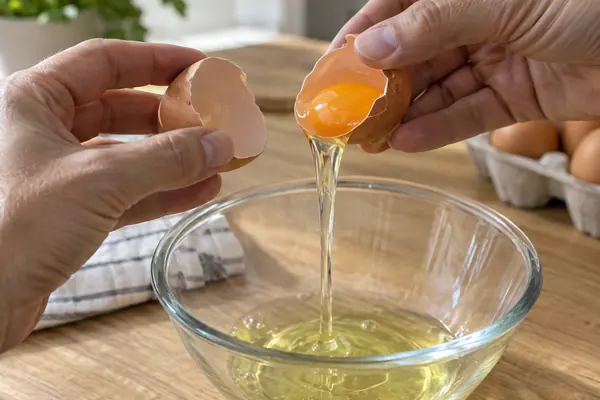
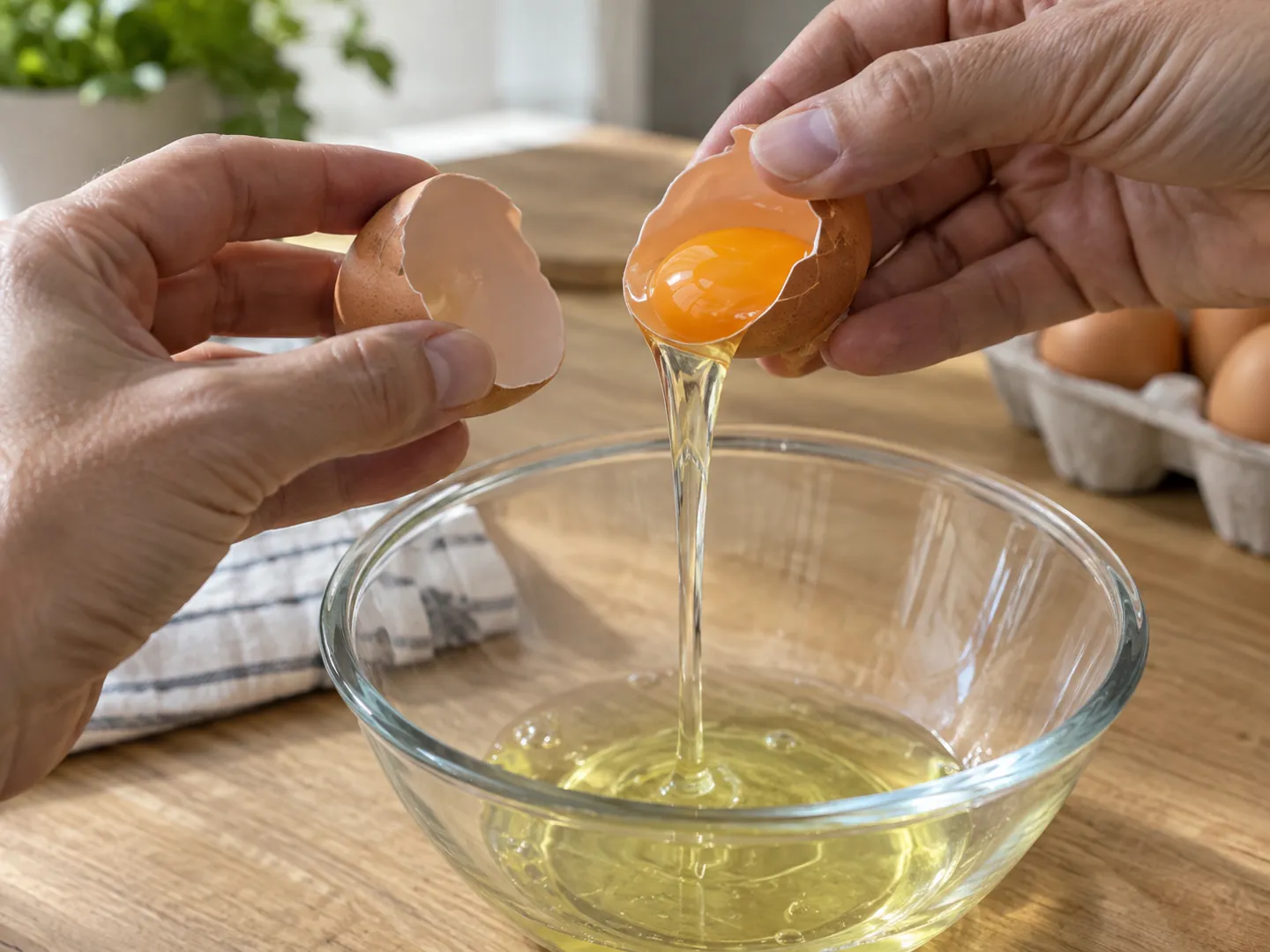
Any fat in a protein foam is disastrous: the proteins cluster around the fat instead of the bubbles. Remove every trace of yolk and use clean bowls.
Check a problem doodlemixer
WHAT THE FOOD SCIENCE SAYS
Whisking egg whites is chemistry you can watch.
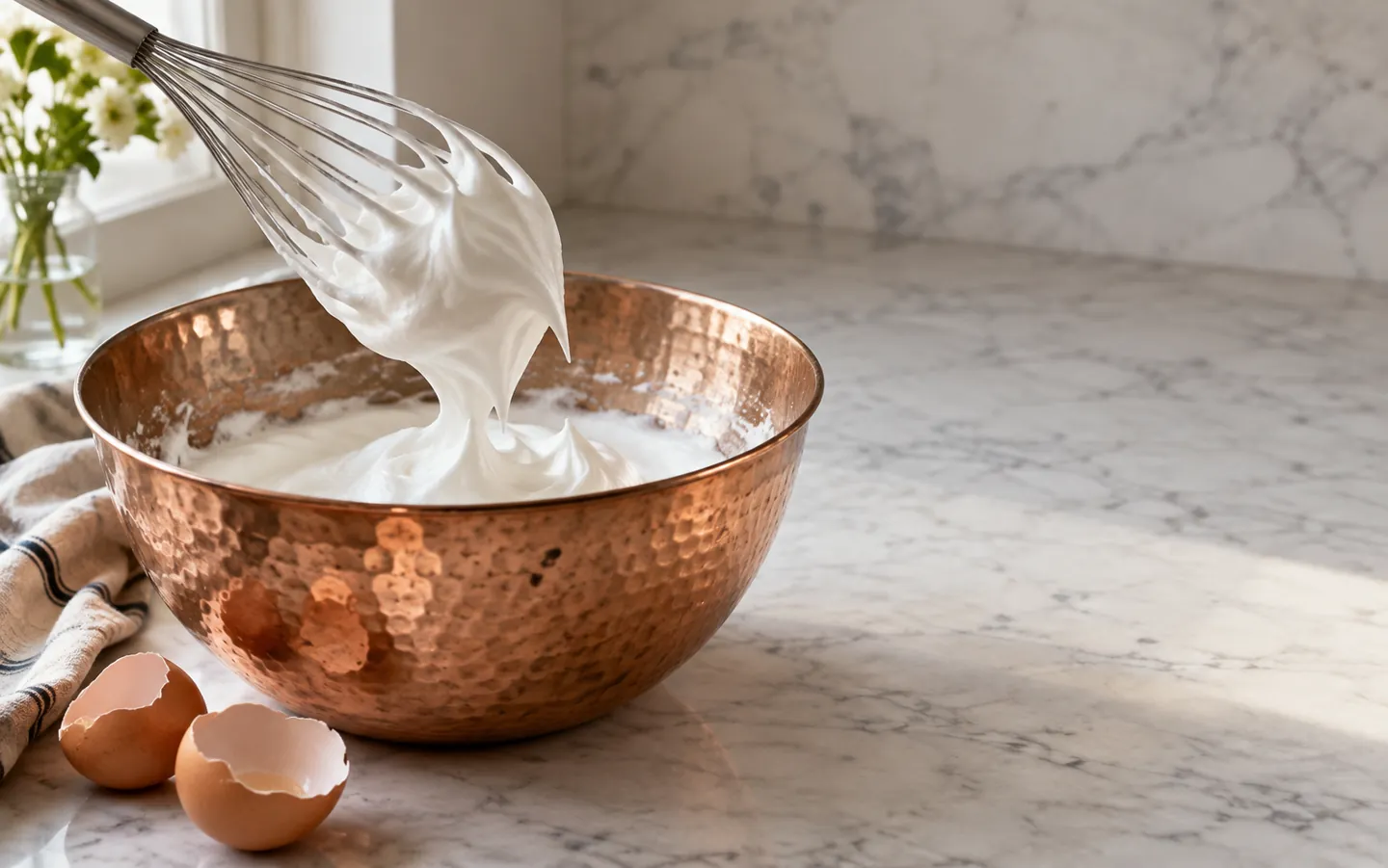
Beating unwinds the proteins in the white so they wrap around air bubbles and hold them in place. Get the conditions right and a clear liquid becomes a glossy foam that stands in peaks.
NO YOLK not even a trace
Check a problemTHE SHORT ANSWER
Three things that make or break an egg white foam.
Each has a chemical reason behind it.
YOLK
Any fat in a protein foam is disastrous: the proteins cluster around the fat instead of the bubbles. Remove every trace of yolk and use clean bowls.
Check a problemCOPPER
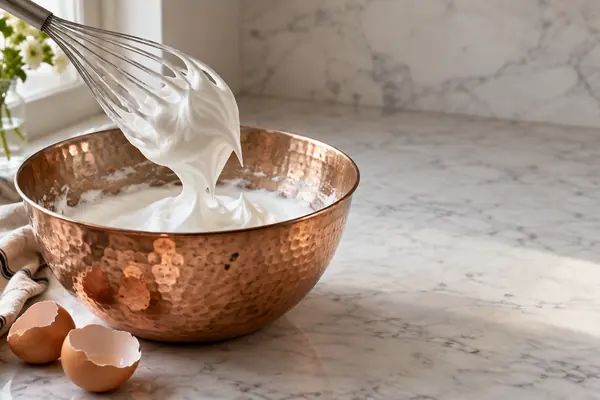
Copper ions bind to an egg white protein called conalbumin, making it more stable. The foam is harder to over-beat and turns slightly yellow.
How copper worksSUGAR
Sugar added at the start slows the foam and lengthens beating. Added near the end, it smooths and stabilises it.
Step by step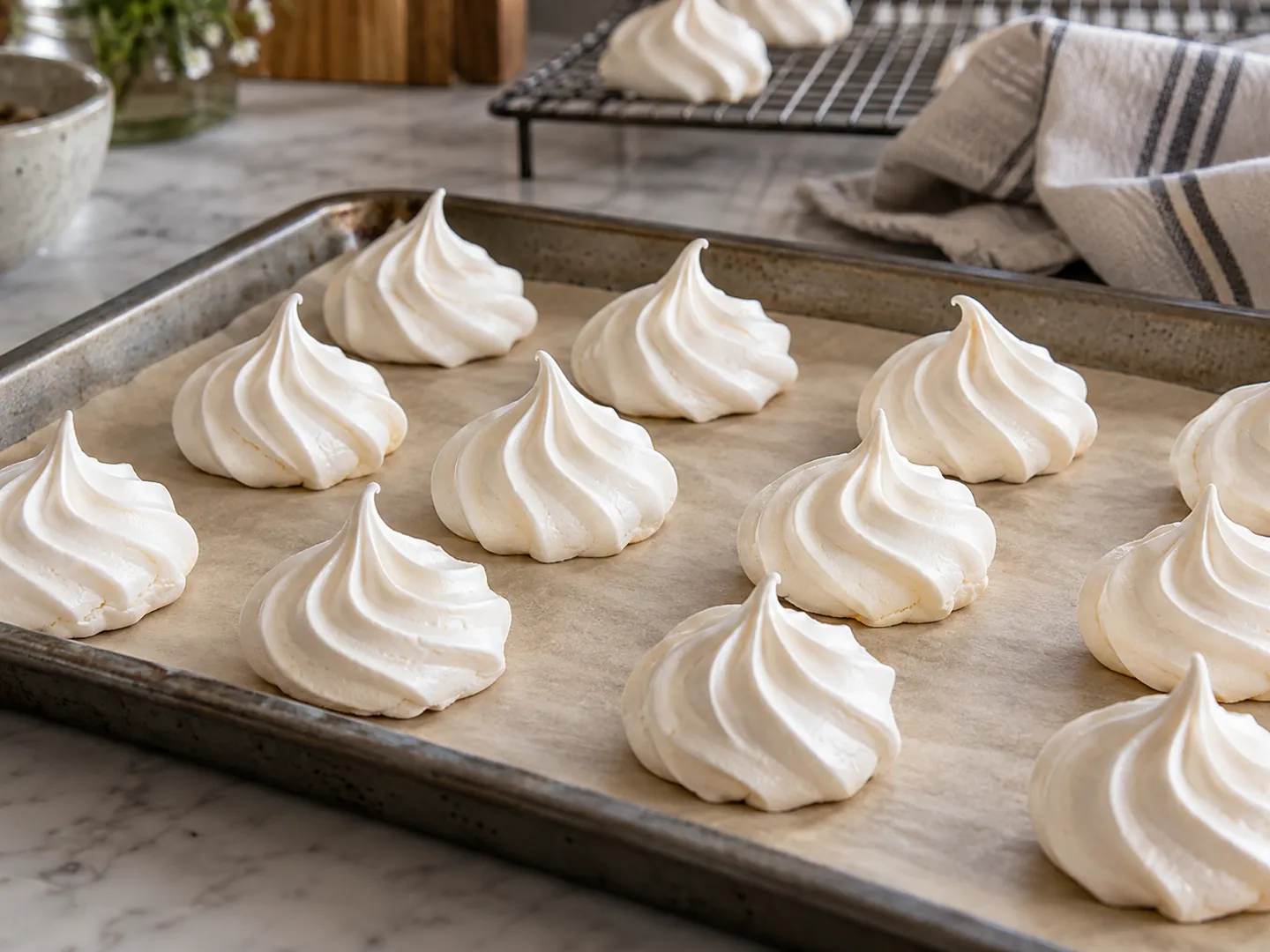
FOUR STEPS TO A STABLE FOAM
Whether you use a hand whisk or an electric mixer, these steps follow the order the food science suggests.
Eggs separate more cleanly cold. Cover the whites and let them reach room temperature before beating.
Beat on low speed until frothy, add acid such as cream of tartar if you are using it, then increase the speed.
When peaks form but droop at the tips, add the sugar gradually to smooth and stabilise the foam.
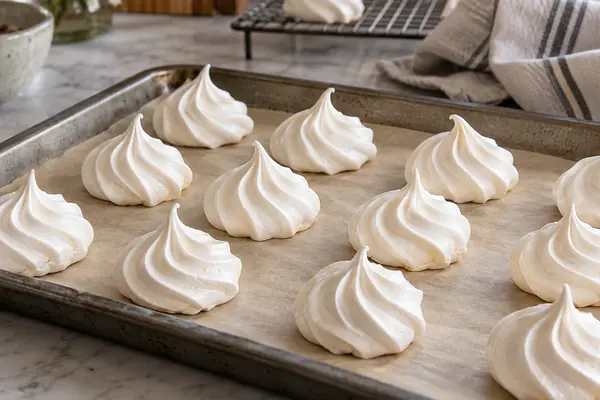
Stiff peaks stand upright and look shiny, not dry. Fold them in gently so the bubbles survive.
TWO NUMBERS WORTH KNOWING
One figure on how long cooks have trusted copper,
one on the stages a foam passes through.
≈ 200 years
How long recipes have called for copper vessels
A 1984 letter in the journal Nature looked into the habit and proposed that conalbumin, a metal-binding protein in egg white, explains why copper helps.
COPPER BOWLS · NATURE, 1984
4 stages
Stages from liquid white to over-beaten
Foamy, soft peaks that droop at the tips, stiff peaks that stand upright and look glossy, then dry peaks that look chunky and leak liquid.
FOAM STAGES · NC STATE EXTENSION
The Chicago Section of the American Chemical Society suggests about a quarter teaspoon of cream of tartar for two to three egg whites when using a glass or steel bowl.
A QUICK FOAM CHECK
Pick something that can happen while you whisk to see what the food science says. The bar shows how much it works against a good foam.
Based on food science teaching materials from NC State Extension, the University of Richmond and the Chicago Section of the American Chemical Society.
WHY COPPER WORKS
As you whisk in a copper bowl, a little copper moves into the egg white and binds to a protein called conalbumin, also known as ovotransferrin. The protein-copper pair is more stable than the protein alone, so it is slower to fall apart.
The result is a more elastic, stable foam with a yellowish tint that rises taller when cooked. Iron and zinc from other bowls also bind to conalbumin, but they do not make the foam more stable, which is why cream of tartar is the usual stand-in.
Questions
The most common reason is fat. Even a small amount, including a trace of yolk or a greasy bowl, prevents foam from forming because the proteins cluster around the fat instead of the air.
Near the end. NC State Extension says sugar added at the start inhibits foam formation and increases beating time, while sugar added at soft peaks smooths and stabilises the foam.
Yes. Copper binds to the egg protein conalbumin and makes it more stable, so the foam is harder to over-beat and holds its peaks longer. It also turns slightly yellow.
It is an acid. It lowers the pH and makes the foam more stable, though it lengthens beating time. It is often used instead of a copper bowl.
If no other ingredients have been added, NC State Extension suggests adding another egg white and beating until the foam is glossy with peaks again.
Updated
ABOUT THIS NAME
doodlemixer.com is part of the DoodleSale portfolio. It isn't in an auction right now, but you can ask about leasing it.